

PoliticsWire
David Maraga questions govt ‘hypocrisy’ after U-turn on Ebola quarantine policy
Maraga has accused President Ruto of hypocrisy over Kenya's Ebola quarantine policy, revisiting the deadly June protests in Laikipia.
Nairobi, Kenya
Kenyan scholars and UDA youth leaders have urged stronger accountability and institutional discipline, citing China's anti-corruption campaign while cautioning against blindly adopting its political system.
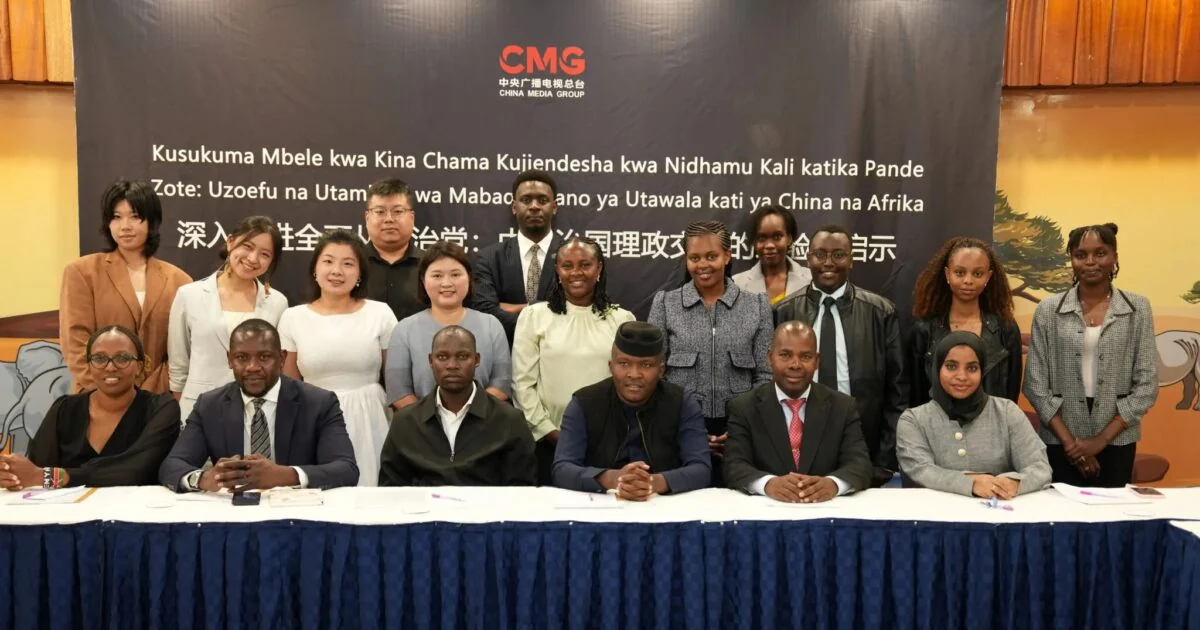
NAIROBI ,Kenya Nov 12 – Kenyan scholars and political leaders have called for stronger institutions, political discipline and accountability in the fight against corruption, saying African countries can draw important lessons from China’s governance model without necessarily adopting its political system. The call was made during a round-table discussion on China’s governance experience and its relevance to African countries, where participants examined the Communist Party of China’s (CPC) approach to leadership, internal accountability, long-term development planning and people-centred governance. University of Nairobi Associate Professor Patrick Maluki cautioned African countries against blindly importing China’s governance system, arguing that the country’s political experience was shaped by a different history, state-building process and constitutional framework. Maluki, who chairs the Foreign Service Academy, said African governments should identify practices that can be adapted to their circumstances while preserving constitutional rights, political pluralism and public participation. “China’s governance experience is shaped by its own history, state-building process and political context. It cannot simply be transplanted into African countries with different constitutional arrangements, social structures and political settlements,” he said. He identified organisational discipline, long-term planning, institutional oversight and anti-corruption measures as some of the areas where African countries could learn from China. Maluki cited the political experiences of Kenya, Tanzania and Uganda, arguing that neither political continuity nor competition alone guarantees good governance or development. Tanzania has been governed by Chama Cha Mapinduzi (CCM) since independence, despite the reintroduction of multiparty politics in 1992. Uganda has been under President Yoweri Museveni since 1986, while Kenya has experienced several changes of presidents and governing political formations. He said the differences in their political trajectories demonstrated that development depended more on the effectiveness of institutions than the length of time a political party or leader remained in power. “The comparison suggests that neither political continuity nor political competition is sufficient on its own to secure development. What matters is whether institutions exercise power responsibly, sustain effective policies, respond to citizens and convert national resources into public benefit,” he said. Maluki added that the people-first principle should be reflected in citizens’ everyday experiences, including access to essential services, employment opportunities, affordable living costs, integrity in public office and the ability to seek redress. He warned African governments against adopting governance practices that merge political parties with the state, weaken constitutional safeguards or turn organisational discipline into a test of personal loyalty. “Political dominance should not be treated as the same thing as stability,” he cautioned. His remarks came as other participants urged African governments to study China’s approach to tackling corruption, particularly its campaign targeting both senior officials and lower-ranking public servants. Kenya Methodist University lecturer Rebecca Ndeto said development could not succeed in an environment characterised by institutional decay and unchecked corruption. She urged African governments to consider China’s ‘tigers and flies’ anti-corruption framework, which targets both powerful officials and junior bureaucrats. “Development cannot succeed in an environment compromised by institutional decay or unchecked corruption,” Ndeto said. She argued that the Chinese model demonstrated the importance of governments having the courage to investigate and hold their own officials accountable, regardless of their positions. “By establishing strict institutional discipline and reinforcing accountability at all levels, governments can build the deep public trust required to execute long-term, ambitious national transformation programmes successfully,” she said. China has pursued an extensive anti-corruption campaign under President Xi Jinping, targeting officials across different levels of government and the Communist Party. The campaign, popularly described as the fight against ‘tigers and flies’, has focused on senior officials and lower-ranking public servants accused of corruption and abuse of office. United Democratic Alliance (UDA) youth affairs representative Kipkorir Brian said Kenya’s political establishment had much to learn from China’s long-standing relationship with Africa and the experience of the Communist Party of China. He pointed to the CPC’s more than 100-year history, saying its organisational experience offered valuable lessons for African political parties. “We as a party, we are looking at East, and Chinese people have been here in Africa for more than 1,200 years. That means the Chinese people have been friends to us,” Brian said. He added that the Communist Party of China had a long history from which UDA and other African political organisations could learn. “There’s a lot that we can learn from them,” he said. Kidi Mwaga, a UDA youth leader, said Kenya continued to face challenges of poverty, ignorance and disease, which required leadership that placed citizens’ aspirations at the centre of government policy. “We as the people of Kenya, we are struggling to alleviate poverty, to alleviate ignorance, and to make sure that disease does not undermine the potential of our people and of our country,” he said. Mwaga maintained that a government’s legitimacy depended on the support and consent of the people, adding that political parties should serve as vehicles for advancing citizens’ aspirations. “We know that a government is only legitimate when it has got the support of the people, the consent of the governed,” he said. He said UDA was keen to learn from the CPC’s experience to strengthen its role in representing the interests of Kenyans. “We are therefore learning from our Chinese, the Communist Party of China, to ensure that our party is the instrument that carries that aspiration of the people,” Mwaga added. National Youth Leader Kariuki Ngunjiri said the engagement was particularly important for young politicians seeking to understand the principles behind effective political organisation. He welcomed the CPC’s contribution to UDA, saying the exchange offered an opportunity for the party to learn about organisational discipline and the culture required to manage political affairs. “This conversation is important, and especially for the young people. As partners, we value the contribution that the Communist Party of China is making to the United Democratic Alliance party to help us learn some of the things that attribute a good disciplined culture to run political issues,” Ngunjiri said. He described the relationship as an important opportunity for political learning and strengthening organisational structures. “That to us is a very important aspect of that relationship,” he added. China’s governance model has attracted attention across Africa, particularly its emphasis on long-term development planning, infrastructure investment, industrialisation and institutional coordination. Its five-year planning system has been central to setting national development priorities and coordinating government programmes over extended periods. However, Maluki’s remarks highlighted the need for African countries to distinguish between learning from China’s development experience and adopting its political arrangements wholesale. The round-table discussion, titled “Putting the People First and Upholding Full, Rigorous Party Self-Governance: Lessons from the CPC’s Approach to Governance for African Countries”, brought together African scholars, political representatives and media commentators. It sought to provide a platform for examining the governance philosophy and practices of the Communist Party of China, particularly in relation to the key messages of the Fifth Plenary Session of the 20th CPC Central Committee. Participants called for greater exchanges between China and African countries, with an emphasis on adapting useful governance practices to local realities while strengthening accountability and ensuring development serves the interests of ordinary citizens.
This report was written and published by Capital FM, not by the Trending News Kenya newsroom. It is republished here in full with credit to the publisher, and the headline remains the copyright of Capital FM. Read our attribution policy. Photographs are the publisher's and are credited above. Last updated 12 November 2026.
Maraga has accused President Ruto of hypocrisy over Kenya's Ebola quarantine policy, revisiting the deadly June protests in Laikipia.
Netanyahu's fight for political survival turns the parliament's opening into a scene of insults and acrimony.
NAIROBI, Kenya Nov 12 – President William Ruto’s State of the Nation Address has been moved to Wednesday, November 18, bringing forward the highly anticipated speech by a day. The…

