
TechnologyWire
LIVE: Jensen Huang resigns as Nvidia CEO as affairs raise security concerns
Jensen Huang, 63, has resigned as chief executive of AI giant Nvidia, according to the company.
Nairobi, Kenya
Much of Africa’s data is collected on the continent but analysed and monetised elsewhere, leaving African institutions with limited control over the knowledge generated from their own resources. Researchers and policymakers are now calling…
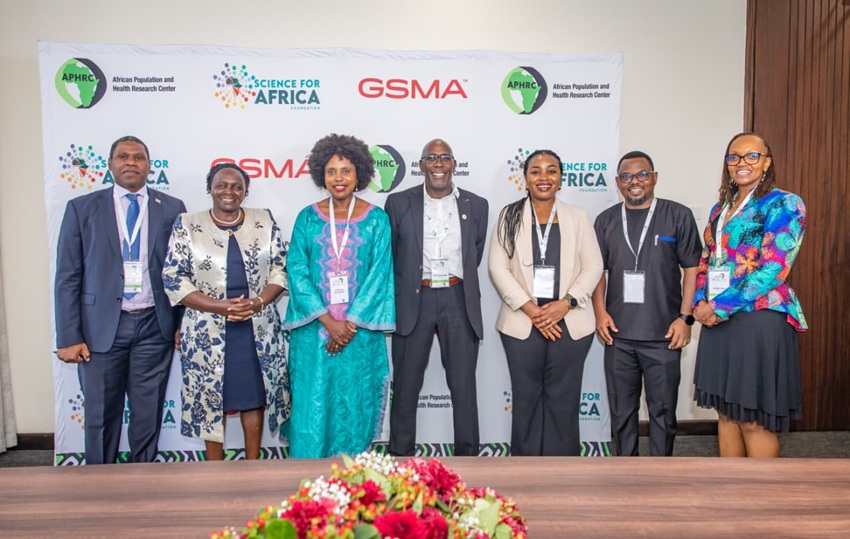
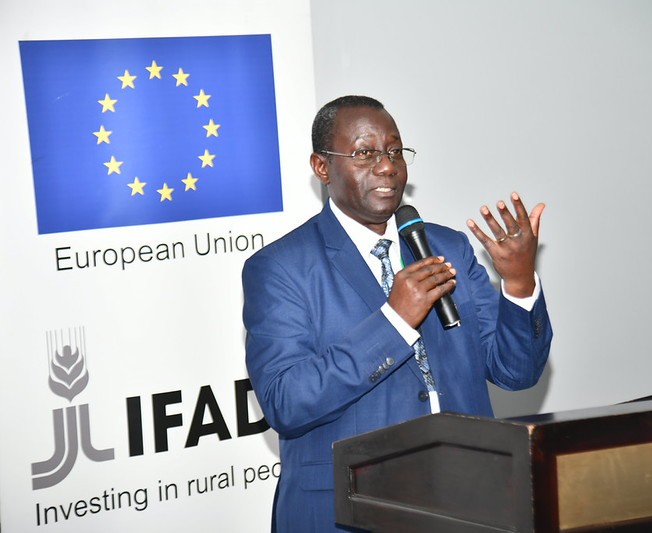
Much of Africa’s data is collected on the continent but analysed and monetised elsewhere, leaving African institutions with limited control over the knowledge generated from their own resources. Researchers and policymakers are now calling for greater investment in local research infrastructure, stronger data governance and partnerships that ensure the continent benefits from its knowledge and scientific discoveries. The call was made during the third Africa Health and Development Annual Research Symposium (AHDARS 2026), convened by the African Population and Health Research Center (APHRC), the Science for Africa Foundation (SFA Foundation) and the Global System for Mobile Communications Association (GSMA). The meeting brought together researchers, policymakers, practitioners and innovators to explore how Africa can strengthen its capacity to generate and use data to inform policies and address development challenges. Held under the theme, “Building African-Centered Data and Knowledge Systems: New Models, New Power. What Can Be Done Differently? ” the symposium focused on ownership, access and the role of African institutions in shaping research priorities. Dr Catherine Kyobutungi, Executive Director of APHRC, said Africa must deliberately harness its data and knowledge resources rather than allow others to control and benefit from them. “Data and knowledge are Africa’s oil. And so the question is: do we let that oil become a curse to the African continent? Or do we work together to harness it, so that all of us can benefit from its value?” she posed. She said the continent needed to invest in infrastructure and capabilities to generate, manage and utilise its own data, just as countries invest in exploring natural resources and developing industries to extract value from them. Kyobutungi said the symposium, now in its third edition, provided an opportunity for stakeholders to assess progress, identify gaps and discuss changes needed in Africa’s research and development landscape. The inaugural edition in 2024 focused on the future of data science and artificial intelligence in Africa, while the second explored decolonising power, health and digital transformation. Dr Catherine Kyobutungi Executive Director APHRC during the conference “If we invest in the infrastructure that allows us to embrace digital transformation, that may be the only way we can actually decolonise power,” she said. She emphasised that data sovereignty goes beyond access to information to include ownership and decision-making over how data is collected, shared and used. “Africa’s data and knowledge systems must be built by us, but they must serve us,” she said, urging participants to question established assumptions and reflect on their responsibilities in shaping the continent’s research future. African researchers must lead knowledge production Prof. Tom Kariuki, Chief Executive Officer of the Science for Africa Foundation, said Africa had considerable research talent and data but continued to face challenges in ownership, infrastructure and influence in global knowledge production. “At the centre of all this is one critical question: Who produces knowledge, who owns it, and who shapes the decisions we make?” he posed. He warned that much of the data collected in Africa was analysed elsewhere, transferring ownership and the benefits of research away from the continent. “As we all know, data is usually collected here. It is analysed elsewhere. Therefore, the ownership is transferred without our consent, and it is monetised to the benefit of others,” he said. Prof. Tom Kariuki CEO SFA Foundation He cautioned that artificial intelligence and big data could reproduce historical inequalities unless African institutions took greater control of digital resources. Kariuki called for a shift from data extraction to data sovereignty, explaining that this should allow African institutions to determine the terms under which their data is shared and used. “Data sovereignty does not mean building a data fortress where people cannot access it. It doesn’t mean that you are closing data off. It means that we set the terms on which it is shared,” he said. Citing the African Population Cohorts Consortium, which brings together more than 60 cohorts across the continent and nearly seven million participants, he said harmonising data and establishing trusted sharing systems would create opportunities for scientific discovery. He also called for an African-led open research ecosystem that reflects the continent’s priorities. “Open means, or must mean, open on African terms. That is what it should be,” he said. Kariuki urged funders to move beyond short-term grants and provide sustained investment in African research institutions and infrastructure. “Don’t give two one-year grants and then say we are going to generate sufficient data. It is going to be more transformative if we invest more in the long term,” he said. He challenged governments to strengthen data governance, researchers to lead the analysis of locally generated data and private-sector partners to support infrastructure development on fair terms. “The question is no longer whether Africa can build its own knowledge systems. The question is how quickly and how effectively we can achieve this,” he said. Collaboration needed to turn data into solutions Kamwulia Okafor, Director of Industry Services at GSMA, said strengthening Africa’s data and evidence ecosystem required collaboration across the public sector, private sector and research community. She said no single institution could address the challenges independently, calling on stakeholders to identify their respective roles and build partnerships. “One key thing I think this shows is that no single actor can work on this data and evidence alone. It is key for us to recognise what piece of the puzzle we are and how we can connect together,” she said. Okafor said GSMA was committed to ensuring digital technologies translated into practical solutions that improve lives and decision-making. “Our single ambition is how we can transform digital technologies so that they are not just technology for the sake of building it, but so they can really transform lives, transform the decisions we make and outcomes for Africans,” she said. She identified fragmented data, uneven quality and limited interoperability as challenges that needed to be addressed. “How can we meaningfully transform this data on our own terms for our own priorities?” she posed, urging participants to build partnerships and translate evidence into better outcomes. Kenya’s Principal Secretary for the State Department for Science, Research and Innovation, Prof. Shaukat Abdulrazak, said African countries must move beyond consuming knowledge and technologies developed elsewhere and strengthen their capacity to generate homegrown solutions. “Africa must therefore move beyond being a consumer of knowledge and technology developed elsewhere. We must become a continent that generates knowledge, develops solutions and translates scientific discoveries into meaningful outcomes for our people,” he said. He said research should respond to pressing development challenges, including improving health outcomes, enhancing food and nutrition security, tackling climate change, creating opportunities for young people and transforming economies. “Research must not be an end in itself. Its true value lies in how it improves lives, informs policies, strengthens institutions and contributes to sustainable development,” he said. Abdulrazak emphasised the need to bridge the gap between research findings and practical application through stronger collaboration among universities, research institutions, government and the private sector. “We must move from research to innovation, from innovation to commercialisation, and from commercialisation to tangible economic and social impact,” he said, calling on universities and research institutions to become centres of innovation, enterprise creation and problem-solving. He said Kenya was advancing a cluster-based approach through the Kenya Science, Research and Innovation Synergy Blueprint to strengthen research financing, institutional capacity, infrastructure and human capital development. He noted that Pillar Five of the blueprint recognises the importance of data and digital infrastructure in advancing research, innovation and evidence-informed decision-making. “We must strengthen Africa’s capacity to generate, manage, protect and utilise our own data. Our data and knowledge systems must be inclusive, accessible, secure and responsive to African priorities,” he said. Prof. Shaukat Abdulrazak Principal Secretary for the State Department for Science, Research and Innovation He also highlighted the Kenya Grand Challenge initiative, which seeks to bring together institutions, researchers and funding partners to address shared development priorities, including maternal and child mortality, preventable diseases, food security, climate change and clean energy. Abdulrazak called on governments, philanthropic foundations, development partners and the private sector to increase investment in African-led research, describing it as a strategic investment in the continent’s future. “Ultimately, we must ask ourselves: Has our research improved the quality of life of our people? Has it created more jobs? Has it strengthened our economy? Has it informed better policies and public services?” he posed. Story by Victoria Musimbi The post Africa must take charge of its data and knowledge systems, researchers say appeared first on KBC Digital .
This report was written and published by KBC, not by the Trending News Kenya newsroom. It is republished here in full with credit to the publisher, and the headline remains the copyright of KBC. Read our attribution policy. Photographs are the publisher's and are credited above. Last updated 12 November 2026.
Jensen Huang, 63, has resigned as chief executive of AI giant Nvidia, according to the company.
An agricultural research and extension programme implemented across several African regions has reached more than 12,000 farmers with improved technologies and innovations aimed at boosting productivity, strengthening food security, and bu…
Inspector General of Police Douglas Kanja is leading a delegation from the National Police Service (NPS) to Israel for the UVID DroneTech Expo 2026, an international conference and exhibition focusing on unmanned systems and drone technolo…